- Lab-tested quality you can trust
- Canada-wide shipping
- Guaranteed Delivery

Anabolic steroids reach users through very different routes. Some are manufactured by regulated pharmaceutical companies. Others come from unregulated or black-market sources, often called underground labs (UGLs). This guide explains the difference between pharmaceutical grade vs underground lab steroids, what published research has found about black-market products, and which product information you can check yourself.
Health Canada’s regulatory framework focuses on requirements such as market authorization, Drug Identification Numbers (DINs) and Good Manufacturing Practices (GMP). In this guide, we use “pharmaceutical grade” descriptively for products manufactured by regulated pharmaceutical companies under applicable drug-manufacturing standards.
What we mean by “pharmaceutical grade”
In this guide, “pharmaceutical grade” describes products made by regulated pharmaceutical companies under applicable drug-manufacturing standards, such as Good Manufacturing Practices (GMP).
GMP is a set of quality requirements covering how drugs are produced and controlled, from raw materials and facilities to testing, labelling and record keeping. In Canada, GMP requirements for drugs are set out in Part C, Division 2 of the Food and Drug Regulations. Health Canada’s Good manufacturing practices guide for drug products (GUI-0001) explains how these requirements apply to activities such as fabricating, packaging, labelling, testing, importing, distributing and wholesaling drugs.
Products made under these standards typically come with:
- a manufacturer you can identify and look up
- a batch (lot) number and an expiry date on the labelling
- sealed packaging, often with a product information leaflet
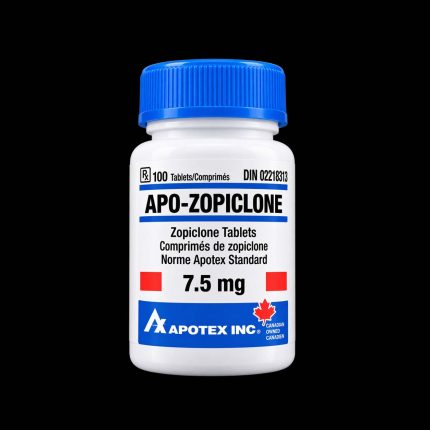
- for products authorized for sale in Canada, a Drug Identification Number (DIN) on the label
For context, PG Anabolics groups products from pharmaceutical manufacturers in its Pharmaceutical Grade Steroids category.
What is an underground lab (UGL)?
“Underground lab” is an informal term for unlicensed producers of anabolic steroids. Products from unregulated or black-market sources do not have the same regulatory oversight as authorized pharmaceutical products, such as licensing, inspection and product authorization. This does not mean that every such product is of poor quality. It does mean that the label cannot be checked against an independent regulatory record.
Published analytical studies have found substantial variability, as well as counterfeit and substandard products, among black-market anabolic steroids. A 2022 systematic review and meta-analysis by Magnolini and colleagues in BMC Public Health pooled 19 studies covering 5,413 samples from the Americas and Europe; most of the studies analyzed samples seized by authorities. It estimated that 36% of the black-market anabolic steroids studied were counterfeit, meaning the active ingredient did not match the label, and that an additional 37% were substandard, meaning the labelled ingredient was present but not at the labelled concentration.
The authors also report high heterogeneity between studies and significant differences between regions. These figures describe the samples in the studies reviewed. They are not a measure of any particular producer or market, including products in Canada.
Pharma grade vs UGL steroids at a glance
| Pharmaceutical grade | Underground lab (UGL) | |
|---|---|---|
| Manufacturer | Regulated pharmaceutical company | Unlicensed or unidentified producer |
| Regulatory oversight | Subject to applicable drug-manufacturing standards (in Canada, GMP under the Food and Drug Regulations) | Outside the regulatory framework that applies to authorized drugs |
| Authorization in Canada | Products authorized for sale in Canada carry a DIN on the label | Not authorized for sale in Canada; no Health Canada-assigned DIN for that product |
| Traceability | Batch number and expiry date linked to the manufacturer’s records | Batch details may be missing and cannot be checked against a regulatory record |
| Labelling | Labelling subject to regulatory requirements, often with a product leaflet | Labelling decided by the producer |
| Published testing information | Quality testing is part of GMP; records are kept by the manufacturer | Depends on the producer or on third-party analysis; published studies show wide variability |
Why the difference matters
The practical issue is verification. With an authorized pharmaceutical product, the manufacturer, the product and its labelling can be traced. With a product from an unregulated source, there is no independent record to check the label against.
Analytical studies show why this matters. The Magnolini review describes black-market products that contained no active ingredient, a different active ingredient, a different amount than labelled, or more or fewer ingredients than listed.
For injectable products, sterility is a separate question from chemical content. It depends on how and where a product was made, and it is assessed with microbiological testing. It cannot be judged by looking at a product.
How to verify product information and spot warning signs

The checks below help you confirm product information and spot warning signs. They cannot, alone or together, confirm what a product actually contains.
- Identify the manufacturer. Check the manufacturer named on the packaging and, where available, verify the manufacturer and product through official regulatory records or the manufacturer’s official product information.
- Check the batch (lot) number and expiry date. They should be clearly printed. Where both outer and inner packaging are present, the details should be consistent.
- Verify the DIN for products authorized for sale in Canada. A Drug Identification Number is an eight-digit number assigned by Health Canada and located on the label of prescription and over-the-counter drug products. It identifies the manufacturer, product name, active ingredient(s), strength(s), pharmaceutical form and route of administration.
- Look the DIN up in the Drug Product Database. Health Canada’s Drug Product Database can be searched by DIN or by company. The database entry should match the label.
- Inspect the packaging integrity. Seals, caps and blister foil should be intact. Damaged, opened or resealed packaging is a warning sign.
Packaging appearance alone cannot confirm authenticity or contents. Counterfeit packaging can look convincing, and genuine packaging can be reused or relabelled. Confirming what a product contains requires laboratory analysis.
What lab testing can and cannot tell you
Laboratories can use validated analytical methods to examine a sample. Depending on the method and the laboratory, chromatographic techniques such as high-performance liquid chromatography (HPLC) and spectrometric techniques such as mass spectrometry (GC-MS or LC-MS) can be used to assess the identity of the active ingredient and its concentration, and to detect other substances.
Microbiological testing is a separate matter. Sterility and endotoxin tests assess whether an injectable product is contaminated with micro-organisms or bacterial toxins. Chemical tests for identity and concentration do not answer that question.
A lab result describes the sample that was tested. It does not guarantee every unit in the same batch, and it says nothing about future batches. A useful report names the laboratory, the product and batch tested, the date, the method used and the measured result.
Frequently asked questions
Is “pharma grade” the same as pharmaceutical grade?
“Pharma grade” is an informal shortened expression. This article uses “pharma grade” and “pharmaceutical grade” descriptively for products manufactured by regulated pharmaceutical companies under applicable drug-manufacturing standards. To verify a product, rely on the actual manufacturer, its regulatory status (for example, a DIN for products authorized for sale in Canada) and the applicable product information.
What is the difference between a counterfeit and a substandard product?
In the Magnolini review, “counterfeit” means the active ingredient does not match the label, and “substandard” means the labelled active ingredient is present but not at the labelled concentration.
Can packaging prove that a product is genuine?
No. Packaging, batch codes and other printed details can be copied. They help you check product information and spot warning signs, but only laboratory analysis can show what a product contains.
What does a DIN tell me?
A DIN shows that a drug product was assigned a number by Health Canada before being marketed in Canada, and it identifies the product’s manufacturer, name, active ingredient(s), strength(s), form and route of administration. You can compare the label with the entry in Health Canada’s Drug Product Database.
Are both injectable and oral steroids made by pharmaceutical manufacturers?
Yes. Pharmaceutical manufacturers produce both injectable and oral anabolic steroid products. The verification checks in this guide apply to both forms. For injectables, sterility is an additional consideration.
The bottom line
The difference between pharmaceutical grade vs underground lab steroids comes down to regulatory oversight and traceability. Products from regulated pharmaceutical manufacturers are made under drug-manufacturing standards and, in Canada, authorized products carry a DIN that can be checked in Health Canada’s Drug Product Database. Products from unregulated sources lack that oversight, and published studies have found counterfeit and substandard products among them, with wide variation between studies. Product information checks can reveal warning signs, but only laboratory analysis can show what a specific sample contains.
Sources
- Health Canada. Drug Identification Number (DIN).
- Health Canada. Drug Product Database.
- Health Canada. Good manufacturing practices guide for drug products (GUI-0001). Implementation date: July 1, 2020.
- Magnolini R, et al. Fake anabolic androgenic steroids on the black market: a systematic review and meta-analysis on qualitative and quantitative analytical results found within the literature. BMC Public Health. 2022;22:1371.
Related posts
Pharmaceutical Grade vs Underground Lab Steroids: What the Difference Means
Anabolic steroids reach users through very different routes. Some are manufactured by regulated pharmaceutical companies. Others come f...

Which Syn Pharma Compound Is Right for Your Fitness Goal?
Choosing the right Syn Pharma compound starts with your goal. Whether you’re bulking, cutting, or focused on strength or recomposition, this guide breaks down which product aligns best with your fitness journey.

Syn Pharma: A Comprehensive Review of Top Performance Products
Syn Pharma has established itself as a prominent player in the Canadian performance enhancement market, offering a range of products ta...

What is Tren?
When it comes to anabolic steroids, few compounds carry as much weight in the fitness world as Tren. Short for Trenbolone, Tren is a st...

What are Steroids?
Steroids are synthetic substances that imitate natural hormones in the human body. These compounds play a vital role in medicine and pe...
How To Choose A Steroid Source In Canada
FACTOR #1: CANADIAN STEROID BRANDS/MANUFACTURERS
I would argue that the most important aspect when it comes to choosing a reli...
The Best Oral Steroid
One of the most common questions that beginners ask is: What is the best Oral Steroid to use? In this article, we are going t...
Cutting Steroids Vs Bulking Steroids
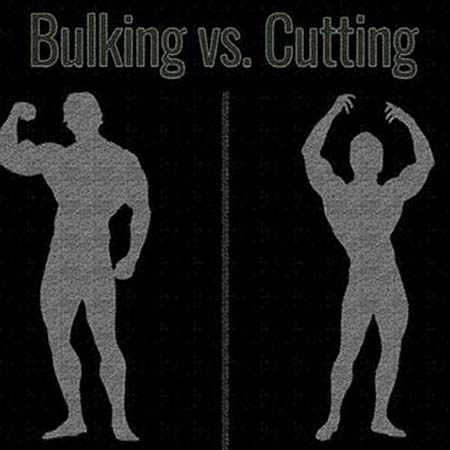
The use of Anabolic Steroids has become much more common and acceptable nowadays. Since steroids are more mainstrea...

Steroid Use In Canada
It is no secret that the use of both Injectable Steroids & Oral steroids has increased significantly in Canada ...

Differences Between SARMS & Anabolic Steroids
SARMS (Selective Androgen Receptor Modulators) have recently become the newest fitness fad and for good reason. SARMS are very effectiv...

Steroid Use and Canadian Pro BodyBuilders
When compared to the United States, Canada has only about 10 percent of the population, making the total number of Canadian bodybuilder...
Injectable Steroids Vs Oral Steroids
Introduction
One of the most frequently asked questions is: the difference between Oral Steroids versus Injectable St...




 Oral Steroids
 Injectable Steroids
 Peptides
 Human Growth Hormone
 Weight Loss & Metabolism
 Sleep Support
 Anxiety & Depression
 Nootropics & Cognitive Enhancement
 Sexual Health & Fertility
 Acne & Hair loss
 SARMS
 Anti-Aging and Longevity
 Pain, Inflammation & Muscle Relaxants
 Blood Pressure & Cholesterol Management
 Post & On Cycle Therapy
 Antibiotics & Antivirals
 Beauty and Cosmetic
 Liver & Digestive Health
 Insulin & Fluid Management (Diuretics)
 Women’s Health & Hormones
 Needles/Syringes & Bacteriostatic Water
 Zar Pharma
 SYN Pharmaceuticals
 Proctor Labaraotires
 Pharmaceutical Grade